← Back to all tools
Retrospectives· Brazil· Founded 2016
EasyRetro
Improve your team with fun sprint retrospectives
Overall score
5.7
Improve your team with fun sprint retrospectives
Best for: Small to mid-size agile teams, scrum masters and consultants who want a clean, fast, low-friction retro tool without enterprise overhead.
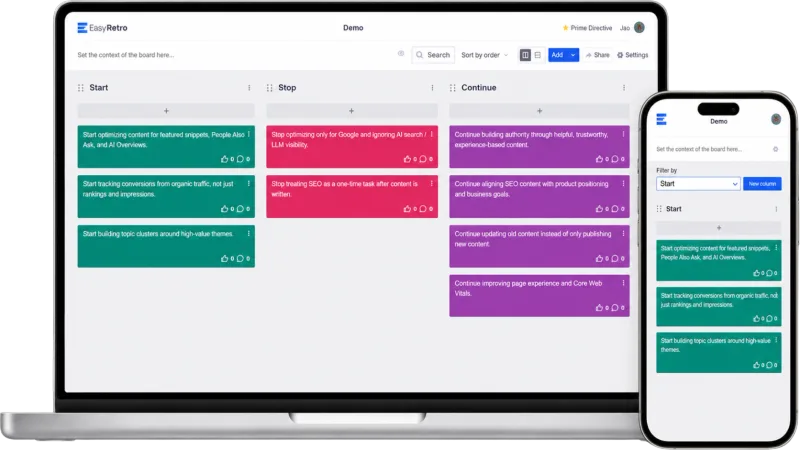
EasyRetro pitches itself as the simple, fun way to run sprint retrospectives. The homepage leads with "Improve your team with fun sprint retrospectives" and emphasises 100+ ready-made templates, drag-and-drop boards, voting, comments and unlimited team members.
"A retrospective is an opportunity to learn and improve, in a fun environment."
The voice is friendly and indie rather than enterprise — they boast that "we made the most configurable board out there" and that "there's no correct way of running retrospectives". Recent additions like AI board summaries, drawing on cards, hide-column and a refreshed timer are positioned as small quality-of-life wins rather than a pivot toward an AI-first or analytics platform. The pitch targets scrum masters and small agile teams who want something that just works.
EasyRetro (rebranded from FunRetro in November 2020 and still the same product) is a strong pick if your only job is to run a clean, engaging retrospective with minimal setup. The template library is large, the UX is fast, and the free tier is generous enough for small teams or consultants to trial. Action items export to Jira in bulk, boards export to Confluence, PDF and several other formats, and shipped updates through 2024-2026 (bulk Jira export, embeddable boards, timer refresh, drawing on cards, hide-column) show the product is still actively maintained.
Against the agile lens it falls short on the things serious facilitators eventually need: no health-check model, no mood or sentiment tracking, no cross-team rollups or trend reporting, and AI is limited to a single board-summary feature. The enterprise story is also thin — the vendor relies on GCP's certifications rather than holding SOC 2 / ISO 27001 itself, SAML SSO is gated to enterprise accounts, and there's no SCIM or audit logs.
Best for indie teams and scrum masters; less suitable for programs that need health tracking, governance or platform-grade integrations.
Last reviewed: June 2, 2026